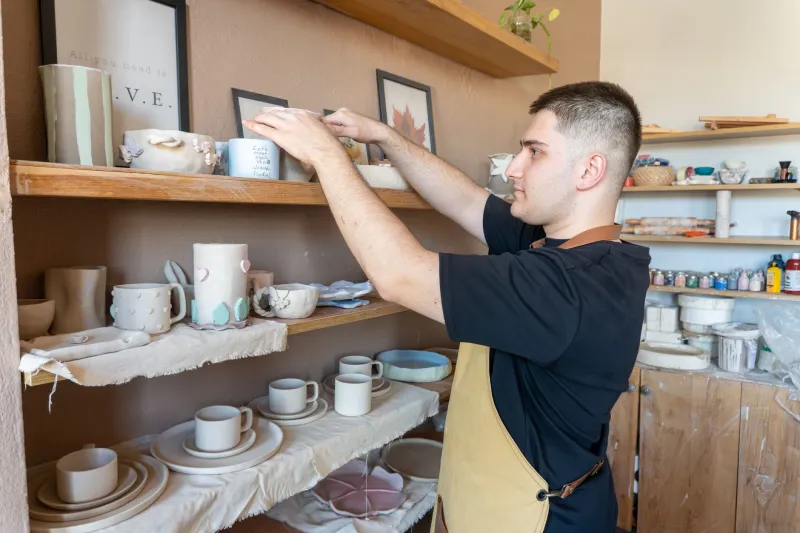
One Shelf, Zero Clutter: Displaying Handmade Ceramics in a Small Rented Flat
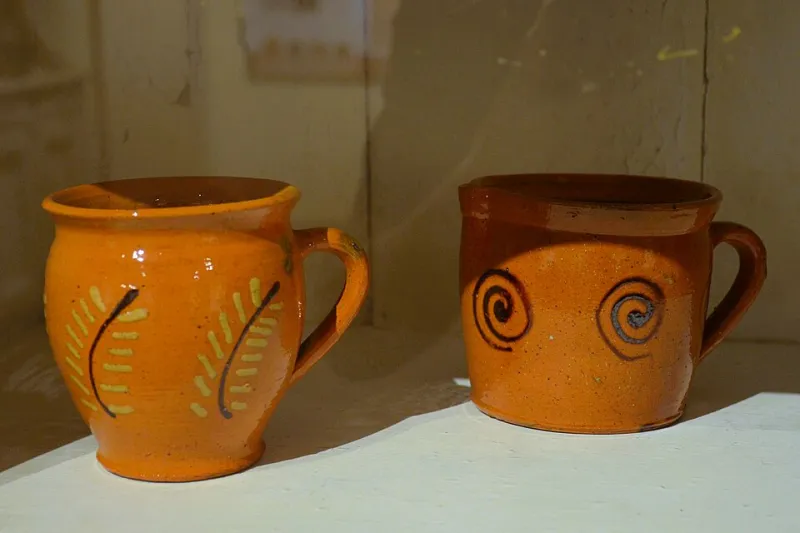
Photo: Silar, CC BY-SA 4.0, via Wikimedia Commons
You know the drill. You buy one lovely mug at a makers' market, then another, then a jug because it was reduced, then a small bowl because it matched. Within a year, every flat surface in your one-bed is hosting a dusty little regiment of pottery and you've started describing your own kitchen as 'a bit much'.
The collection isn't the problem. The lack of a plan is. So here's the plan: give it one shelf. Not a wall of shelves, not a glass cabinet, not a gallery wall that needs its own social media account. One shelf, one ledge, one deliberate pause in the room where handmade things get to breathe — and everything around them gets to stay quiet.
Why a single shelf beats a whole wall
A small flat isn't short of ceramics. It's short of breathing room. Give your pots a defined frame and something odd happens: the eye settles, the room feels bigger, and the pieces you actually love start getting noticed instead of blending into a fog of stuff.
There's a practical upside too. One shelf is quicker to dust, easier to rearrange and far less likely to end up as a permanent home for unopened post. If you can see the back of the shelf, you haven't overfilled it.
First, the shelf itself — and your deposit
Renting means thinking about walls before thinking about styling. Check your tenancy agreement before anything goes up, and keep the email where your landlord says yes. It takes two minutes and saves an awkward conversation at checkout.
No-drill ledges held on adhesive strips are the renter's friend, but read the weight rating properly. A lot of standard strips top out around three to five kilos, and a timber ledge plus five stoneware mugs will find that ceiling fast. Put your heaviest piece near a bracket, not at the far end of a span.
If you can use fixings, do — into a stud or proper masonry, with the right plugs for plasterboard. And avoid the obvious traps: directly above a radiator, over a doorway, above a bed, or on the wall of a steamy bathroom with no extractor fan.
No wall space at all? The top of a bookcase, a windowsill, a radiator cover or the back of a wide desk all do the same job. Just watch condensation on sills and keep glazed pieces out of harsh direct sun.
The three-height rule
Once the shelf is up, resist the urge to line things up like a shop display. Vary the heights. One tall piece to anchor — a jug, a bottle vase, a cylinder planter. One mid-height mug or tumbler. One low, wide bowl to ground the arrangement. Three objects, three heights, and you're most of the way there.
Odd numbers generally behave better than even ones. If something looks stiff, it's usually because two similar shapes are sitting at the same level, arguing politely.
Let texture carry the colour
Keep the glaze palette tight — two or three tones across the whole shelf — then do the interesting work with surface. Speckled stoneware next to a clear-glazed porcelain. A ribbed mug against a smooth matte bowl. An unglazed foot showing raw clay against a glossy rim.
That's where the calm comes from. Matching colours with mismatched textures reads as considered. Matching everything reads as a showroom.
Dried stems, handled with restraint
One stem, or three thin ones, never a bouquet. Dried grasses, seed heads, a single twist of eucalyptus, all doing the job of softening the hard edges of pottery without competing with it.
Two things worth knowing: make sure stems are properly dry before they go in, and if your vase is porous or unglazed, stand a small glass jar inside it. Nobody wants a tide mark on a shelf they can't move.
Books as plinths
A short stack of two or three hardbacks is the cheapest riser you'll ever own. Lay them flat, turn the spines in or out depending on how you feel about colour, and stand a small bowl on top. More than three and the stack starts to look like a to-do list.
One statement piece. Only one.
The wonky teapot. The big sculptural bowl. The thing you bought on holiday and carried home in hand luggage. Give it the best spot, give it space either side, and let it be the loudest voice on the shelf.
If two things are shouting, nobody hears either of them.
Keep it calm with a rest box
Here's the trick that saves small-space collectors: keep a shoebox in the cupboard and rotate. Seasonal pieces come out, others go away for a few months. If you haven't missed something in a season, that's useful information.
Aim for the shelf to be roughly a third empty. Negative space isn't wasted space — it's the thing that makes the rest look deliberate.
The practical bits
Dust with a soft brush rather than a cloth, so you're not dragging grit across a glaze. Never put a handmade pot in a dishwasher unless the maker has explicitly said it's fine. And if you're adding a small clip-on light, go warm and go low — pottery looks best in soft, low light, and heat near a shelf is a bad idea.
The fifteen-minute refresh
Once a month, take everything off, dust the shelf, and put it back in a slightly different order. It costs nothing, it stops the arrangement going stale, and it's a decent excuse to handle the pieces you bought because you loved them.
One shelf. A handful of good things. Room to breathe. That's the whole rule.