Collected, Not Bought: A Low-Waste Christmas Table with British Glassware for 2026
Photo: vintage British pressed glass Christmas table candlelight charity shop styling, via www.babeyond.com
The best Christmas tables rarely look as if they were bought in one afternoon. They look collected: a set of pressed-glass tumblers from a charity shop, a jug inherited from an aunt, a few handmade bowls that have seen every December since they were made. In 2026, with so much emphasis on buying less and choosing better, that collected look is not just charming. It is practical.
Low waste does not mean bare. It means choosing pieces that can be washed, kept and passed on; mixing what you already own with a few careful finds; and letting candlelight do the heavy lifting instead of disposable décor. British glassware is a good place to start, because it is widely available second-hand, beautifully made and very hard to wear out.
Start with the shelf you already have
Before you buy anything, empty your kitchen cupboards and see what is hiding at the back. Inherited wine glasses, jam jars, small tumblers, a decanter with a chip on the stopper, the odd handmade mug — all of it can work on a Christmas table. The goal is not a matching set. The goal is a table that looks as if it belongs to a real household, because it does.
Give everything a warm soapy wash and dry it properly. Check rims for chips and bases for cracks. If a piece is cracked, retire it from food use and use it for flowers, candles or pens instead. A table can carry a few stories like that without looking careless.
Charity-shop glass: what to look for
Charity shops, hospice shops, church fairs and car-boot sales are full of British glass, especially in the weeks before Christmas. Look for pressed glass with a good weight, cut glass with deep facets and coloured glass in amber, smoke or cranberry. A set of six is not required. Three tumblers and two wine glasses can look deliberate if you group them together.
Check the rim first, then the base. Small surface scratches are normal and often disappear once the glass is on the table. Chips and cracks are not worth the risk. Avoid painted decoration if you plan to wash the glass often, and be cautious with very old lead crystal: use it for short-term serving rather than storing acidic drinks for days.
British names to keep an eye out for include Dartington, Caithness, Bristol Blue and Isle of Wight Studio Glass. You do not need to become a collector. One nice tumbler that catches the candlelight is enough to lift a whole table.
Mixing vintage glass with handmade ceramics
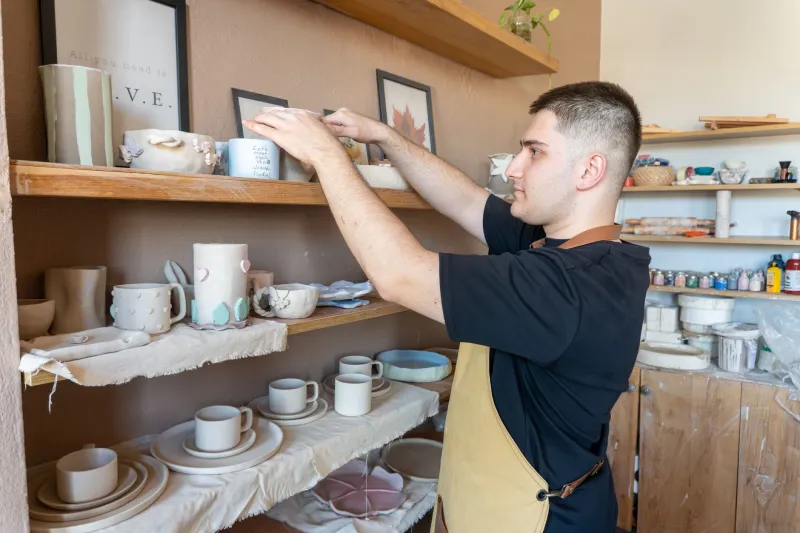
Handmade ceramics give vintage glass something to sit against. Use plain stoneware plates as the anchor, then add glass for sparkle. Keep the palette fairly tight: clear, smoke or amber glass works well with cream, oat and ochre glazes. If your ceramics are patterned, let the glass stay simple. If the glass is heavily cut, keep the plates quiet.
Texture is the real trick. A rough stoneware bowl next to a smooth pressed-glass tumbler feels more interesting than another matching set. Handmade mugs can stand in as water tumblers, especially if they are generous and sturdy. A small jug of milk or custard on the table also earns its keep.
Candlelight that earns its place
Candles are the quickest way to make a table feel festive, but they need a bit of thought. Use stable holders with a wide base, keep flames away from foliage, napkins and loose sleeves, and never place candles under a shelf or near a draught. If children or pets are at the table, choose LED candles or keep real candles well out of reach.
Unscented candles are usually best near food, so the smell of dinner can do its own work. Tealights in small vintage glasses can look lovely, but only if the glass is heat-safe. Do not put a candle into delicate cut glass or a thin tumbler just because it fits. A plain ceramic dish or a sturdy brass holder is safer. Repeat candles down the table in small clusters rather than one tall centrepiece, and the light will feel softer and more generous.
A centrepiece with a second life
A low centrepiece keeps conversation flowing and doubles as a place to put the Christmas pudding. Use a large bowl, a cake stand or a charity-shop platter as the base, then add foraged greenery, dried orange slices, cinnamon sticks and a few small baubles you already own. Keep it low enough that people can see across the table.
Avoid plastic glitter and disposable foil shapes where you can. British-grown foliage, rosemary, bay and eucalyptus all dry well and can go into the compost afterwards. If you want height, use a single glass vase with a few stems rather than a crowded arrangement. The table should feel festive, not barricaded.
Low-waste swaps that still feel special
Cloth napkins from a charity shop, tied with twine or a strip of leftover ribbon, look better than paper ones and can be washed for years. Brown paper place cards, handwritten in pencil, are simple and compostable. Borrow extra glassware from a neighbour rather than buying a new set. If you are short of serving dishes, use the handmade bowls you already have instead of reaching for foil trays.
When you do buy new, buy British where you can. A handmade tumbler or small glass dish from a UK studio is an investment rather than a disposable decoration. It will not date, it can be repaired or replaced individually, and it will still look good next December.
Washing, storing and keeping
Wash glass in warm, soapy water and dry it straight away to avoid water marks. Store delicate pieces upright or padded with cloth, and keep a note of any provenance inside the box if you have one. Charity-shop finds often come with a story; write it down before it disappears.
A low-waste Christmas table is not about denying yourself. It is about choosing pieces that can come back year after year, and letting the table look like the sum of your own small discoveries. In 2026, that feels like the most festive thing of all.