Old Glass, New Story: Styling Charity-Shop Finds with Modern Ceramics
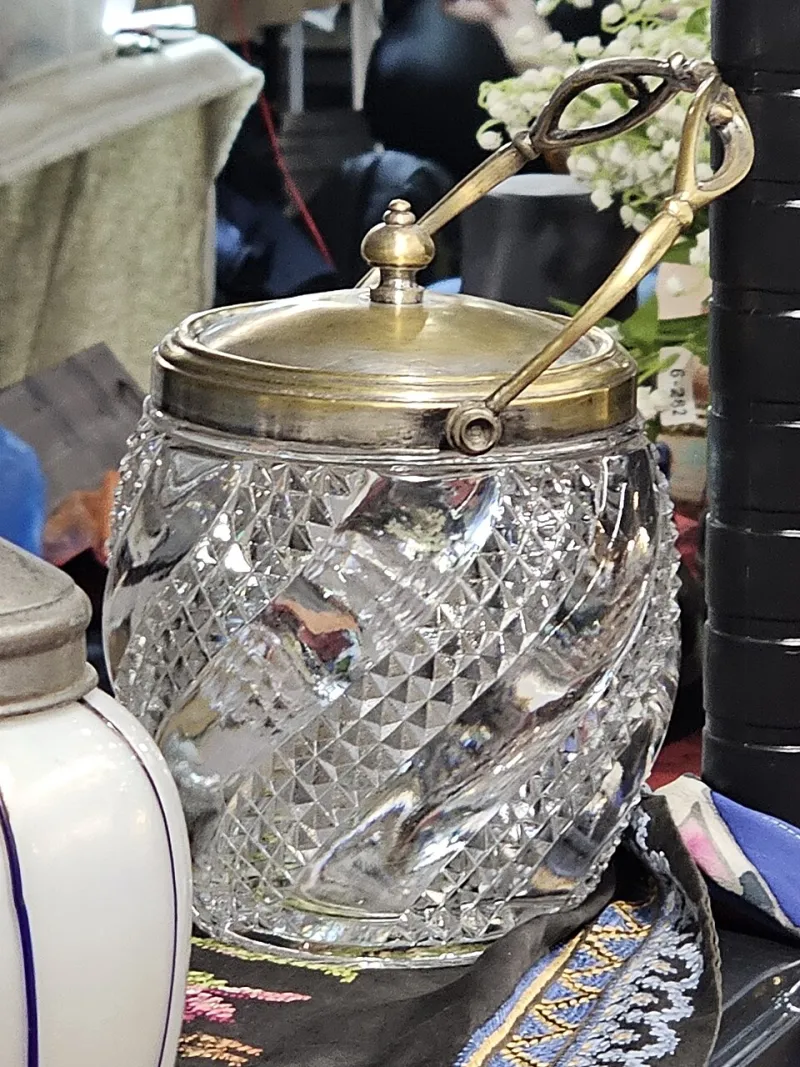
Photo: Tess Mattew, CC BY-SA 4.0, via Wikimedia Commons
There is a particular kind of charity-shop glassware that looks magnificent under fluorescent lights and slightly unhinged once you get it home. You know the sort: a cut crystal tumbler for £2, a pressed glass jug with a pattern like a pineapple, a set of amber goblets that seem to have escaped from a 1970s dinner party. The temptation is to buy all of it. The better move is to buy one or two good pieces and give them room to breathe.
Styling vintage British glass with contemporary ceramics is not about creating a museum shelf. It is about mixing textures, keeping the colour palette tight and letting the glass do the sparkling. Here is how to do it without veering into car-boot-sale chaos.
First, learn to spot the good stuff
Charity shops are full of glass, but not all of it is worth your £3. Pressed glass — the kind made in moulds, often with geometric or floral patterns — should feel solid and evenly made. Look for sharp pattern detail, a smooth rim and no cloudy patches. A little wear on the base is fine; it means the piece has lived. Deep scratches across the bowl are not. Hold it up to the light. If the pattern looks soft or the glass is full of bubbles, put it back.
Cut glass is different. The facets should be deep and polished, not shallow and dull. Run your finger carefully around the rim to check for chips. A good piece will ring faintly when you flick it, though please do not audition every tumbler in the shop. Look for maker marks on the base — names like Stuart, Edinburgh Crystal or Whitefriars are worth a quick search on your phone. But do not get hung up on labels. A well-made unnamed tumbler is better than a chipped branded one.
Choose a colour story, not a colour explosion
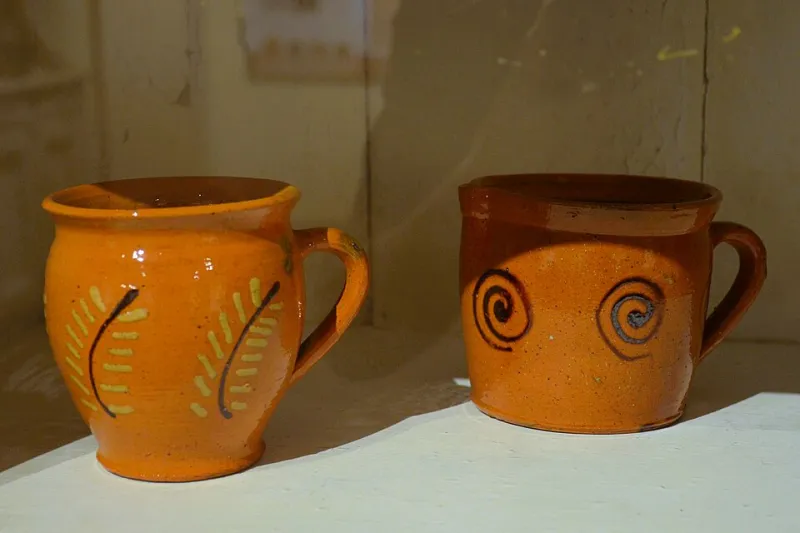
The fastest way to make charity-shop glass look like a car boot is to buy every colour at once. Pick a lane. Clear glass is the easiest starting point and works with almost any ceramic. Smoke grey and olive green feel calm and modern. Amber is warmer and looks excellent with speckled stoneware. If you fall for one bright piece — a cobalt blue vase, say — let it be the only loud thing on the shelf.
Think in terms of three materials: glass, ceramic and something natural. A clear pressed-glass jug, a matte stoneware vase and a small wooden bowl will always look more considered than five glass pieces fighting for attention. The ceramics do not need to be expensive. A simple white mug or a hand-thrown dish from a local market is enough.
Build a shelf story with scale and negative space
A shelf is not a storage unit. It is a small stage. Start with the largest piece — a jug, a vase or a wide bowl — and place it slightly off-centre. Add one or two smaller glass pieces at different heights. Then bring in a ceramic piece to break up the shine. Leave gaps. Negative space is what separates a styled shelf from a jumble sale.
Group odd numbers. Three tumblers, one jug and one ceramic bowl is a classic combination. Stack a couple of small glasses if you have them, but do not stack everything. Vary the heights: tall, medium, low. If everything is the same size, the eye gets bored. If everything is different, the eye gets tired. Aim for a gentle rhythm.
The tabletop version
For a table, restraint matters even more. Use clear or subtly tinted glass tumblers with your everyday ceramic plates. Add a pressed-glass jug for water and a small ceramic dish for salt. That is it. A single stem of foliage in a glass bottle can be enough. If you are using cut crystal, keep the rest of the table simple: linen napkins, plain plates, maybe a candle. Cut glass plus patterned china plus a floral runner is a lot. Cut glass plus matte stoneware is a quiet joy.
Avoid the car-boot look
The car-boot look comes from overcrowding, mixed messages and novelty. You can avoid it by asking three questions before you buy: Does this piece have a clear job? Does it fit my colour story? Would I still like it if it were the only glass thing I owned? If the answer is no, leave it for someone else.
Also, be honest about condition. Cloudy glass from too many hot dishwasher cycles will never sparkle again. Chips are not charming. A crack is a future accident. Buy less, choose well and give each piece a proper home.
Let the glass be the accent
The joy of this approach is that it lets both sides shine. Charity-shop glass brings history, pattern and a bit of sparkle. Contemporary ceramics bring calm, texture and a modern shape. Together they tell a story that is neither vintage-themed nor showroom-perfect. It is just your home, a little more considered.
Start with one shelf or one table setting. Pick one colour, one texture and one piece you love. Then stop. That is the Glazy Daze way: a little handmade calm, and no clutter in sight.