Ceramics Without the Confusion: A Market-Goer’s Jargon Buster
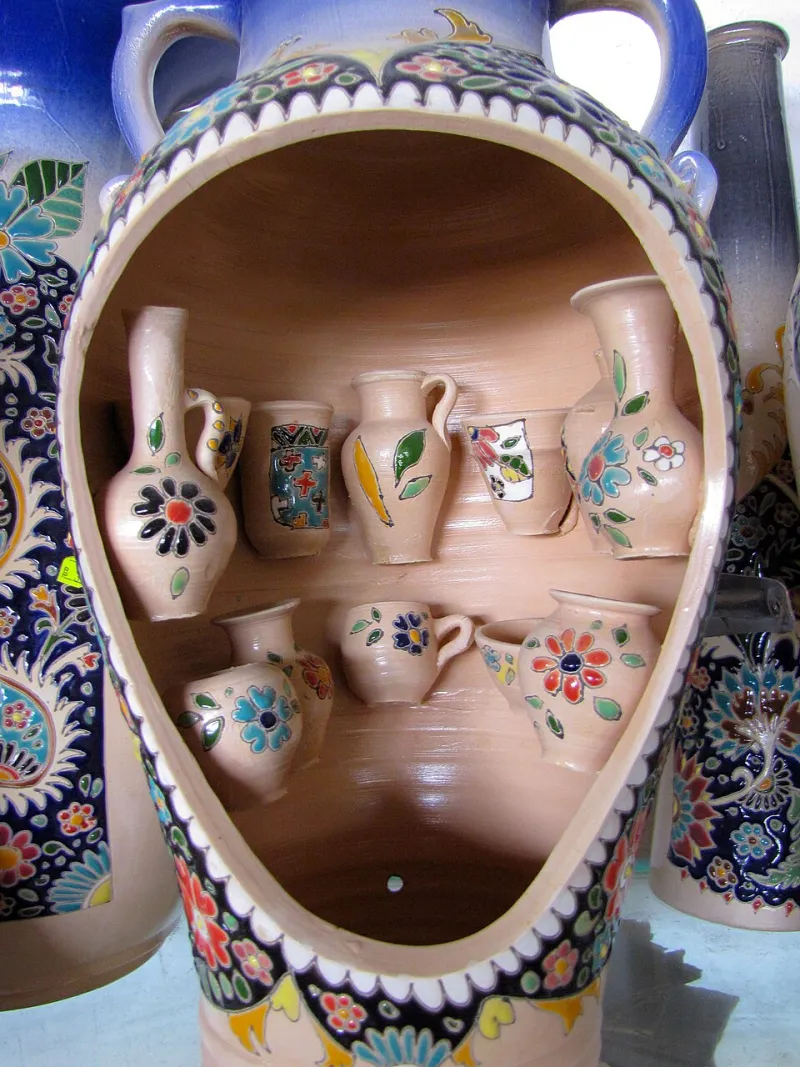
Photo: Mostafameraji, CC BY-SA 4.0, via Wikimedia Commons
Stand at a UK makers’ market long enough and you’ll hear a quiet language drifting over the stalls. A potter will tell a customer the mug is ‘reduction fired’, another will mention ‘grog’ in the clay, and someone else will describe a bowl as ‘shino’. None of it is meant to exclude you. It’s just shorthand — the sort of vocabulary that builds up when people spend years with their hands in clay. But if you’re buying a piece you intend to use every morning, a little decoding helps.
Start with the body, not the glaze
Most British studio pottery you’ll meet falls into three broad families: earthenware, stoneware and porcelain. Earthenware is fired at lower temperatures, stays slightly more porous unless glazed, and often feels warmer and chunkier in the hand. Stoneware is fired hotter, becomes dense and durable, and is the workhorse of many UK kitchen shelves. Porcelain is finer, paler and often more translucent, but it isn’t automatically ‘better’ — it’s just a different clay body with different demands.
Knowing which one you’re holding tells you a lot about how the piece will behave. A stoneware mug is likely to shrug off daily tea and toast. A delicate porcelain cup may want a gentler life. Neither is a con; they’re simply different objects for different routines.
Slip and grog: the supporting cast
Slip is clay mixed with water until it’s pourable. Potters use it like glue to join handles and spouts, or to decorate a surface with trailed lines and dots. It’s also the basis of slip casting, where liquid clay is poured into a plaster mould. If a maker says a piece is ‘slip cast’, they don’t mean it’s fake or lesser — they mean it was formed in a mould rather than thrown on a wheel. Plenty of well-made, affordable ceramics start this way.
Grog is fired clay that’s been crushed and added back into a clay body. It sounds like a punishment, but it’s a useful ingredient: it opens up the clay, reduces shrinkage and warping, and gives hand-built pieces more strength. It can also create a lovely gritty texture, especially on the unglazed foot of a pot. If you run your finger over a bowl and it feels slightly sandy, that may be grog doing its job.
Shino, celadon and the mystery of reduction
Glaze names are where things get poetic. Shino is not one single colour. It’s a family of glazes, often creamy, milky or orange-blushed, associated with Japanese pottery traditions and much loved by British makers. Shino glazes can be thick, soft and slightly irregular, and sometimes show ‘carbon trapping’ — smoky grey marks where carbon has been caught in the glaze during firing. That’s not a flaw; it’s part of the point.
Celadon is another word worth knowing. It usually describes a green, blue-green or grey-green glaze, often with a gentle pooling effect in the dips of a bowl. The colour comes from iron in the glaze and a particular kind of kiln atmosphere. Which brings us to reduction firing.
In a reduction firing, the kiln is starved of oxygen at key moments. The flames pull oxygen from the glazes and clays, and that chemical shuffle can produce richer colours, softer edges and unpredictable surfaces. Oxidation firing, by contrast, has plenty of oxygen and tends to give cleaner, brighter results. Reduction is harder to control, which is one reason a reduction-fired piece may cost more. You’re paying for risk as well as finish.
Food safety, dishwashers and the honest answer
‘Food safe’ and ‘dishwasher safe’ are not the same thing. A glaze can be perfectly safe for eating from while still being too fragile for a hot dishwasher cycle. Crazing — the fine web of cracks in a glaze — doesn’t automatically make a pot unsafe, but it can let moisture in over time. A maker who knows their work will tell you plainly what they’d do at home.
It’s also fair to ask whether a piece is fully vitrified. That means the clay has become dense and non-absorbent during firing. It’s a useful question for everyday bowls and mugs. If the answer is vague, ask how they’d recommend washing it. A good potter won’t mind.
What the price tag is really telling you
A handmade mug is not just clay and glaze. It’s throwing or hand-building time, drying time, bisque firing, glazing, a second firing, kiln space, electricity, breakages and the occasional piece that collapses in the night. British studio energy costs have made all of that harder in recent years, and many makers are pricing more honestly than they used to.
So when you see a mug at £32 and wonder why it isn’t £12, the jargon is part of the answer. Shino glazes, reduction firings and groggy stoneware bodies aren’t just fancy words. They’re choices that change how a piece looks, how long it lasts and how much skill it takes to get right.
Three questions worth asking
The next time you’re at a studio sale or a weekend market, try a few simple questions. ‘What clay body is this?’ ‘How would you wash it?’ ‘Is this glaze likely to craze?’ You don’t need to sound like an expert. You just need enough information to choose a piece you’ll actually use — and to enjoy the language rather than feel shut out by it.