Twelve Tiny Squares: Why Potter's Test Tiles Deserve a Shelf of Their Own
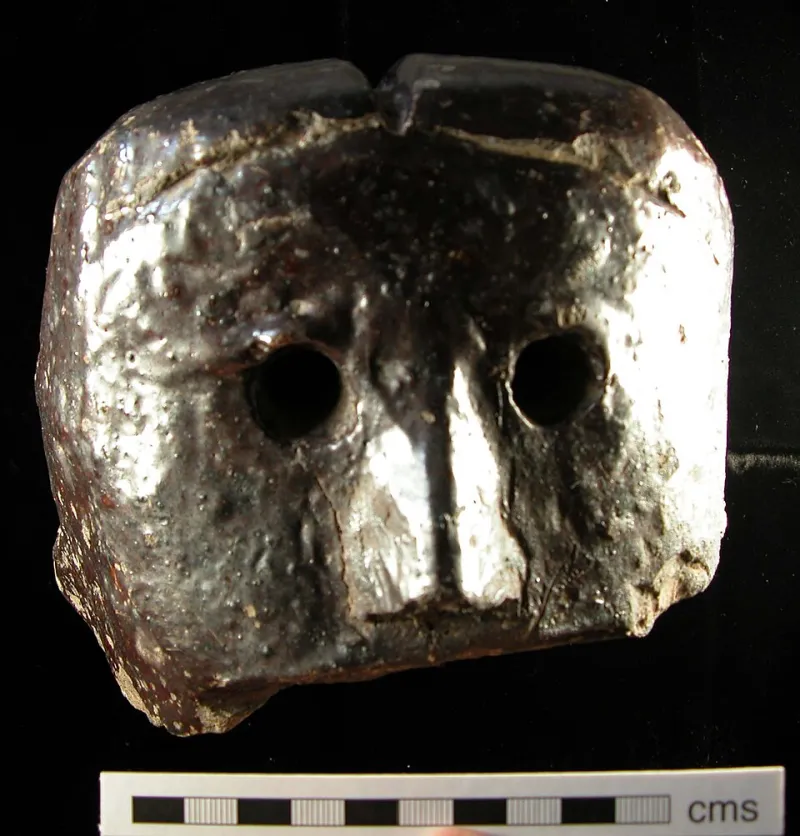
Photo: Kent County Council, Andrew Richardson, 2004-05-14 12:18:08, CC BY-SA 2.0, via Wikimedia Commons
At a studio open day in Sheffield a couple of winters ago, I found myself ignoring the shelves of mugs and crouching instead beside a plastic tub labelled, in biro, 'tests — 50p each'. Inside were around forty thumb-sized squares of clay, each glazed in something slightly different: a milky green that had gone cloudy at the edges, a rust brown that pooled into tiny craters, a white that had crawled back from the rim like a tide going out. I spent four pounds and came home with eight. They are, without competition, the best thing in my kitchen.
That tub is not unusual. Walk into almost any working pottery in the UK and you'll find a biscuit tin, a shoebox or a drawer of these little glazed squares, made over months and sometimes years. Increasingly, potters sell them — often for the price of a coffee — and increasingly, people like me buy them. Here's why they're worth your attention, and how to live with them without turning your windowsill into a geology display.
What a test tile actually is
Before a potter commits a new glaze to a whole kiln's worth of pots, they commit it to something small. A test tile is exactly that: a flat offcut of clay, usually somewhere between a postage stamp and a beer mat, sometimes pressed with texture, sometimes curved, dipped or brushed with a glaze and fired alongside real work.
The point is information. The tile records how a glaze behaves on a particular clay body, at a particular temperature, in a particular kiln. Does the celadon break pale over a ridge and pool dark in a dip? Does the tenmoku go metallic where it's thin? Does the tin white craze, crawl, or sit perfectly still? Potters often fire several tiles at once with different combinations, layer one glaze over another, or scribble notes on the back in pencil: glaze name, firing number, date, clay body. Some keep meticulous notebooks. Many keep the tiles themselves, rattling around in a drawer like a personal library of near-misses.
The story is in the failure
Nobody frames a test tile because it came out perfectly. The interesting ones are the ones that misbehaved.
A tile with a puckered, pinholed surface is a record of a glaze that boiled in the kiln. A square where the glaze has shrunk back from the edges like a fried egg is showing you shivering — a fit problem between glaze and clay. A tile with a hard, tidy line down the middle is a before-and-after: the same glaze on two different clay bodies, or with and without an extra layer underneath.
That is what makes a three-pound square more interesting than a forty-pound vase. The vase is the finished sentence. The test tile is the crossings-out, the second draft, the paragraph moved to the top of the page. Put a dozen of them together and you have a portrait of a potter thinking.
What to look for when you're buying
A few things are worth checking before you hand over your coins.
- Writing on the back. A pencil or marker note — glaze name, date, firing number — turns a pretty square into a small archive. If there's a sticker, ask whether you can peel it off and keep it with the tile.
- Two glazes, one surface. Tiles showing a glaze over a glaze, or a glaze over slip, are often the most visually surprising and the most informative.
- Texture. Ridges, thumbprints, incised lines and scraps of lace all make a glaze break and pool. They're also much easier to see on a shelf than a flat, glossy square.
- Honest edges. A slightly irregular, snapped edge is part of the charm. A tile that's been sanded into a perfect rectangle is fine too, but it tells you less about the process.
- A price that feels fair. Most test tiles sell for between two and eight pounds. At degree shows and open studios, five pounds is common. If a potter is giving them away with a purchase, take one and say thank you.
One practical note: test tiles are not made to be used. They may not be food-safe, they may craze, and they may not survive a dishwasher. Treat them as objects to look at, not as coasters.
A dozen squares, one narrow shelf
The great advantage of test tiles is that they ask almost nothing of your home. A row of twelve takes up about the width of a paperback and the depth of a side plate.
On a narrow windowsill, stand them against the glass in a shallow wooden tray, with a small dab of museum putty behind each one so they don't shuffle every time a bus goes past. Do bear in mind that windowsills get cold and damp in a British winter, and direct sun will eventually fade some surfaces. Rotate them every few months.
On a shelf, a picture ledge is your friend — the kind designed for children's books works beautifully, and it lets the tiles lean back at a gentle angle. Alternatively, fix a strip of oak batten to the wall with two small brackets and simply stand the tiles on top. A shadow box frame, a few centimetres deep, turns a handful into a single hanging piece; a plate rack meant for six-inch side plates will happily hold a dozen squares in two rows.
Grouping matters more than quantity. Three tiles in the same family — all celadons, all iron-rich browns — read as a considered collection. A single tile, propped on a small acrylic stand next to a lamp, reads as a tiny secret. Both are good. What you don't want is forty of them scattered across every surface, which is how I ended up with a kitchen that looked like a geology field trip.
The etiquette bit
Many potters keep their test tiles as a working archive, and it's worth asking before you assume a drawer is a shop. If they're not for sale, admire them and move on. The best places to find them legitimately are open studio weekends, degree shows, seconds sales and the odd Instagram post from a potter having a clear-out. Buy a mug while you're there. It's only polite.
Start small, stay curious
I now have fourteen of the things, including a chunky little square of speckled stoneware that has been glazed a deep, oily green and looks, depending on the light, like a piece of sea glass or a very old boiled sweet. It cost me three pounds. It has never held a cup of tea, never been on a dinner table, and never had a use of any kind. It is, nonetheless, the object in my house I pick up most often.
A vase asks to be admired. A test tile asks to be read. Start with one, put it somewhere you'll see it every day, and let the quiet joy of a potter's working notes do the rest.