Four Degrees and a Fan Heater: Winter Life Inside Three British Potting Sheds

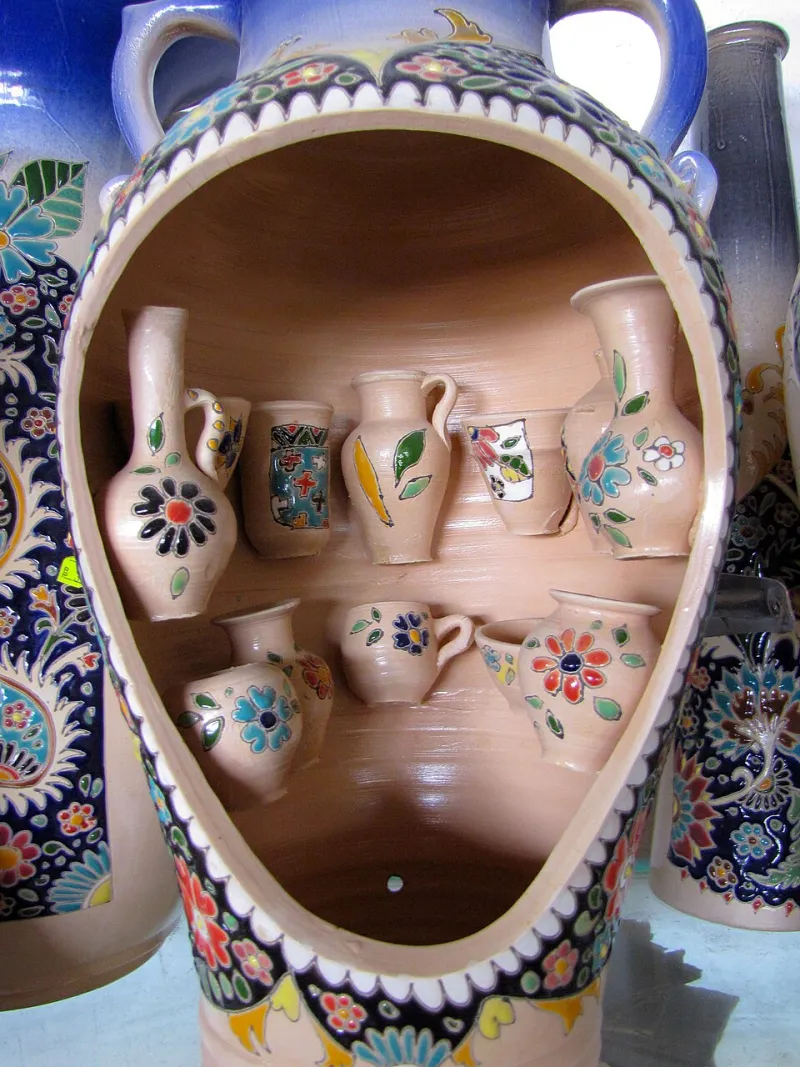
Photo: Victuallers, CC BY-SA 3.0, via Wikimedia Commons
On a damp November morning, the sort where the sky never quite commits to daylight, the idea of a pottery studio looks suspiciously romantic. There is usually a mug in the picture. Possibly a dog. Almost certainly a wood-burner. The reality, for many British makers, is a converted shed with a draught under the door, a bucket of water with a skin of ice on top and a fan heater pointed at somebody’s ankles.
That does not make it less lovely. It just makes it different. Between November and February, when the garden goes quiet and the gift season starts to hum, three UK potters open the doors of their unheated workshops and show how winter reshapes the work. Cold clay, warm kiln, slower drying, colder hands. And, surprisingly often, the best making of the year.
The shed that teaches patience
Elspeth works from a timber shed at the bottom of a sloping garden near Hebden Bridge. In summer it is a sun trap. In winter it is a lesson in thermal humility. The clay comes out of the bag stiffer than it did in October, so wedging takes longer and throwing demands a little more warmth in the hands. She keeps a small fan heater on a timer for the first hour of the morning, not to heat the whole shed but to take the worst of the chill off the wheel.
‘You stop fighting the weather and start working with it,’ she says, wrapping a half-thrown jug in cling film and tucking it into a damp cupboard. ‘In July I can throw and leave things out. In January everything wants to be babysat.’
The shed has no central heating, but it does have a kiln at the end. On firing days, the workshop becomes two rooms in one: the front where clay dries slowly and the back where the kiln gives off a dry, mineral warmth. Elspeth plans her winter around that rhythm. Mugs and small bowls first, because they dry more evenly in low temperatures. Larger pieces get made earlier, then wrapped and left to settle. The gift season is not a sprint; it is a slow accumulation of lidded pots and spoon rests and the sort of generous, handleable mugs that people actually buy in December.
The garage with a kiln at the end
Marcus’s workshop is a single garage in Norwich, lined with offcuts of insulation and lit by two daylight bulbs. The up-and-over door stays shut from November onwards. A dehumidifier runs during the day, a fan heater clicks on and off, and the water bucket lives indoors overnight so it does not freeze solid.
His winter glazes are what he calls cold-sky colours: grey-blues, soft greens, a chalky white that looks almost blue in the low light. ‘You cannot glaze in gloves,’ he says, ‘so you learn to work in short bursts. Twenty minutes of glazing, five minutes with your hands in your pockets. It sounds ridiculous until you try it.’
Marcus fires more often in winter than in summer, partly because the kiln is a useful source of heat and partly because the gift season rewards small, repeatable shapes. He makes batches of ten or twelve beakers, then lets the kiln cool overnight while he packs orders at a table by the door. The garage is not glamorous. There is a kettle on a shelf, a stack of old towels and a noticeboard of firing schedules. But it is honest, practical and warm enough to work in once the kiln is going.
‘The romance is the kiln glow,’ he says. ‘The reality is condensation on the inside of the window and a lot of sweeping.’
The lean-to and the two-kettle rule
Aisha’s set-up in Bristol is the most improvised of the three: a lean-to attached to the side of a terraced house, with a corrugated roof, a single glazed window and a kiln tucked against the back wall. In winter she operates a two-kettle rule. One for tea. One for hot water bottles and for warming the tools she is about to use.
Her winter work is smaller and more domestic. Pinch pots for salt, little dishes for spoons, candle holders that suit the early dusk. She keeps a damp box beside the wheel and a dry box on a shelf above it, moving pieces between the two as the weather changes. ‘A lean-to teaches you to batch everything,’ she says. ‘You do not nip out for one hour. You go out with a plan, you do three tasks, you come back in before your fingers stop cooperating.’
She is candid about the less charming bits. Muddy boots. Cold clay under the fingernails. The morning when the water bucket froze and she had to thaw it with the kettle. But she is equally clear that winter is when her best ideas arrive. The garden is dormant, the street is quiet and the kiln gives the lean-to a purpose. ‘November is when I stop worrying about what the studio looks like and start thinking about what it does,’ she says.
What winter actually changes
The practical shifts are consistent across all three workshops. Clay dries more slowly, so pieces need wrapping, damping and patience. Glazes can feel colder and thicker, and some makers add a little warm water to the bucket rather than glazing with numb hands. Condensation is a constant enemy in sealed sheds and garages, which is why ventilation matters as much as heat. Kilns should never be treated as casual space heaters, but their residual warmth does change how a workshop feels on firing day.
Winter also changes the light. Low, grey daylight makes it harder to judge a glaze surface, so many potters rely on daylight bulbs and a second look the following morning. It is not a disaster. It is simply a different way of seeing.
Small-home takeaways before the big freeze
If your set-up is a corner of a spare room, a conservatory or a shared studio, the winter rules are mostly about small kindnesses. Insulate what you can. Keep clay and glazes off concrete floors. Use a damp box rather than leaving pieces out to dry in a cold draught. Bring water indoors overnight if there is any chance of freezing. Work in shorter sessions and batch your tasks. And do not underestimate a good pair of fingerless gloves or a hot water bottle wedged behind your back.
Most of all, plan for slowness. A mug that would have dried in two days in June may take four in January. That is not failure. It is the season doing its thing.
The romance versus the reality
There is a version of winter potting that exists only in photographs: frost on the window, steam off a mug, a perfect row of bowls drying by a stove. The actual version involves sweeping, condensation, cold fingers and a fan heater that makes a noise like a small aircraft. But the honest version is also the more interesting one. In an unheated shed, the kiln becomes a hearth, the work gets smaller and more deliberate, and the gift season is built one slow batch at a time.
As Elspeth puts it, packing a final order in the last of the afternoon light: ‘Nobody makes pots because it is comfortable. They make them because the process is worth the cold.’