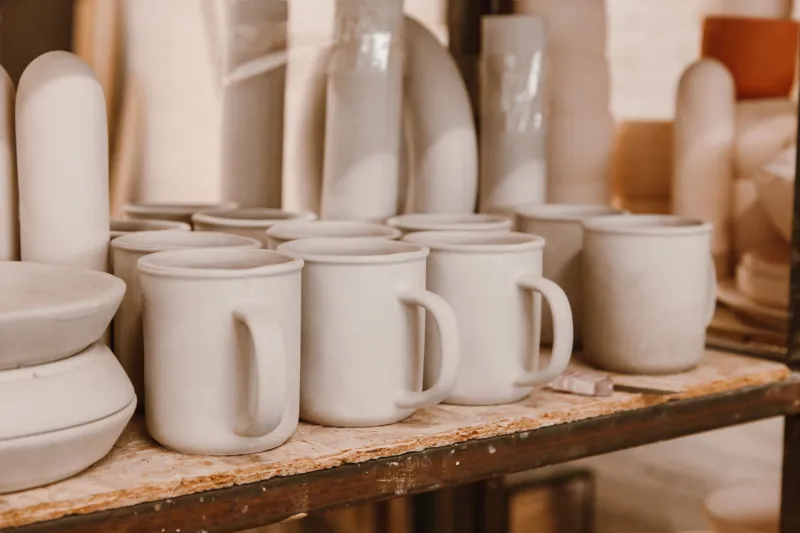
The Chopping Board Studio: Handbuilding Ceramics in a Flat That Isn't Yours
Most pottery advice quietly assumes a shed, a wheel and a landlord who never pops round. In a rented flat, you get a kitchen table, a deposit scheme with a long memory and about forty minutes before the light goes. The good news is that you do not need much. A chopping board, a rolling pin and a bit of restraint will get you further than you think.
Start with a board, not a bench
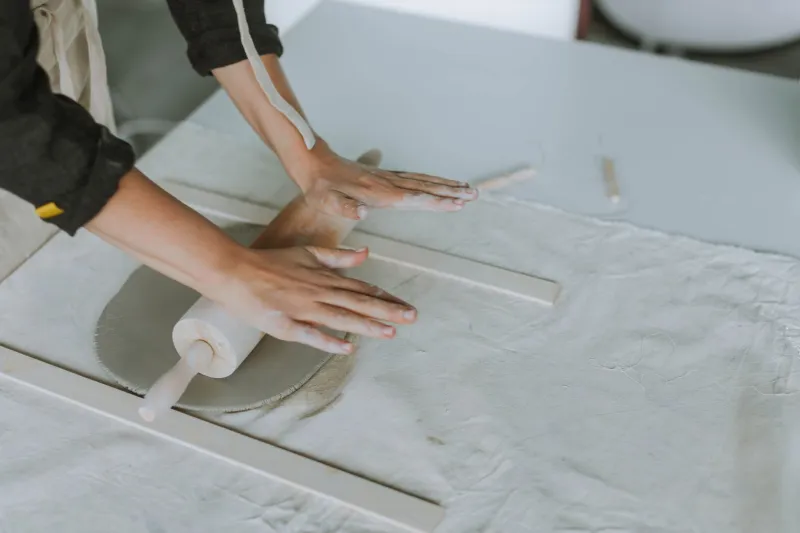
Dedicate a cheap chopping board to clay. Keep it on a rimmed baking tray and you have a contained little workspace that can live on top of the fridge or slide under the bed between sessions. Add a rolling pin you do not use for pastry, two wooden spoons, a fork, an old store card, a sponge and a bowl of water. That is the kit.
Buy clay in small amounts. A 5kg bag of British stoneware is plenty for a winter of spoon rests and little dishes, and it stores in a lidded box without taking over a cupboard. Ask the supplier what temperature the clay wants to be fired to, write it on the bag and keep that information with your pieces. Future you, standing in a community kiln with a box of pots, will be grateful.
Work on the board, not the table. Clay dust is the enemy of deposits, so wipe up with a damp cloth rather than a dry one, and never, ever rinse clay down the sink. More on that shortly.
Three projects that earn their windowsill space
Small is not a compromise here. Small is the whole point. These three projects use slabs and pinching, need no wheel and dry quickly enough to hold your attention.
A spoon rest. Roll a slab about the thickness of a £1 coin. Press the handle of a wooden spoon into it to make a shallow channel, lift the edges slightly with your fingers, and smooth them with a damp sponge. Let it dry slowly under a plastic bag. It will sit by the hob and quietly justify the whole enterprise.
A little ring dish. Roll a smaller slab, drape it over the outside of a small bowl covered in cling film, and press it gently into shape. Trim the edge with the store card once it is leather-hard. This is the project that teaches you not to fiddle. Leave it alone and it will keep its curve.
A bud vase for a single stem. Pinch a small pot, then build up two or three coils around the rim, scoring and slipping as you go. Score with the fork, add a little water to make slip, press the joins firmly and smooth them with a damp finger. It will look handmade. That is not a fault.
The drying bit nobody warns you about
Clay does not like to be rushed. Put your piece on the board, cover it loosely with a plastic bag and open one corner for air. Turn it every day. If it dries too fast, especially near a radiator, it will crack or warp and you will learn the lesson the hard way. Slow drying is boring, which is exactly why it works.
When the clay is leather-hard, tidy the edges with a store card, sponge the surface and check your joins. This is also the moment to add a hole to a bud vase or a hanging pot. Use a wooden skewer, not a needle, and support the clay underneath with your fingers. Then cover it again and wait.
Finding a kiln when you haven't got one
This is the part that stops most renters before they start. You cannot fire clay in a kitchen oven, and you should not try. But you do not need your own kiln. Across the UK there are community kilns, kiln-share schemes, local arts centres and pottery studios that offer firing services for handbuilt work. Ask at a nearby pottery class, a college art department or a village-hall craft group. Search for 'kiln hire' plus your town, and be prepared to book ahead in the run-up to Christmas.
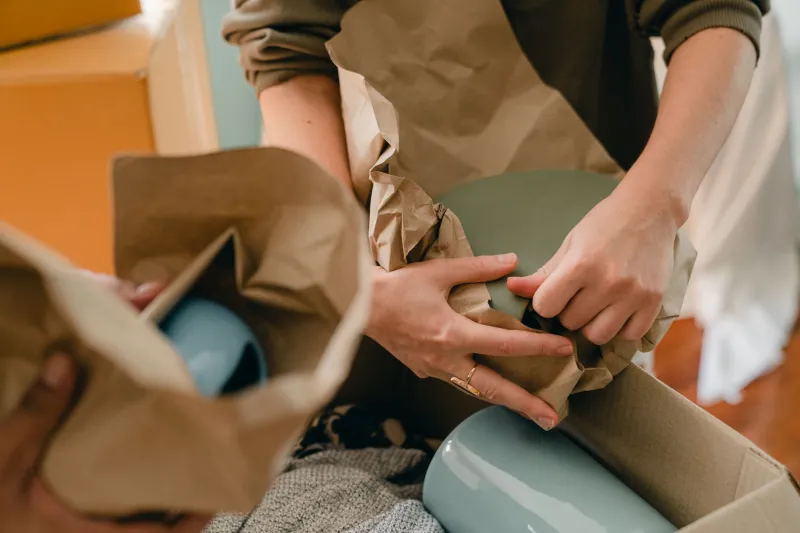
Most places will bisque-fire your work and then glaze-fire it, either with their own glaze or one you supply. Keep pieces small enough to fit a shared shelf, label the bottom with your name and the clay type, and transport everything in a box padded with tea towels. Firing costs vary, but it is usually a few pounds per piece rather than a fortune. Ask about turnaround times before you promise a pot to anyone as a present.
Dust, drains and deposit protection
Clay sets like concrete in a drain. That is not a figure of speech. Never wash tools or hands in the sink with clay still on them. Wipe tools with a damp cloth, let the cloth dry, and bin the crust. For hands, use a bucket of water and tip the water outside or let the clay settle, decant the clear water and bin the sludge.
Store your kit in one lidded box. Keep the board and tray together. Wear an apron, or at least clothes you do not love. If your landlord schedules an inspection, the whole studio can go into a cupboard in four minutes. No wheel, no mess, no drama.
Living with the results without clutter
You will make more than you need. That is fine. Keep the best three pieces, give the rest to friends and accept that a slightly wobbly ring dish is still a ring dish. Style the keepers on a small tray by the kettle, put the bud vase on the windowsill and let the spoon rest do its job by the hob. One tray, three objects, done.
Rotate them when the season changes. Swap the little dish for a candle holder. Move the vase to the bathroom shelf. A rented flat does not need a gallery; it needs a few things that earn their place. Handmade pots look best in a small cluster with a little breathing room, not lined up on every surface like a shop display.
The point is not productivity. It is twenty minutes at the kitchen table with clay under your fingernails and a cup of tea going cold. The chopping board studio will not make you a production potter. It will make you a person with a spoon rest, a small useful thing, and a slightly better evening.