Gone to Ground: Living With a Discontinued Glaze
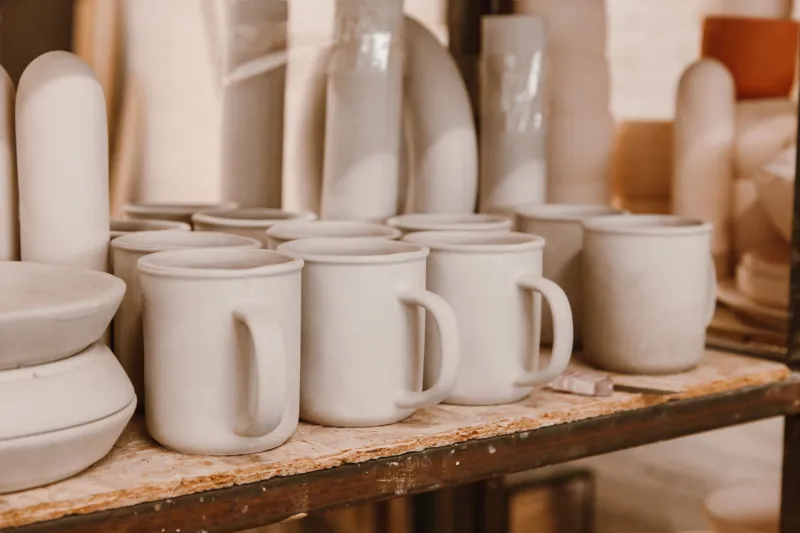
It usually starts with a small pang. You reach for the mug you always reach for—the one with that soft, speckled green that looks like a morning in the Peak District—and you notice a chip, or you finally decide you'd like a second one. You go back to the potter's shop, or the supplier's site, and it's gone. Not sold out. Discontinued. The glaze that got away.
This is not a tragedy on the scale of a cracked kiln shelf, but it is a real little grief. A favourite finish becomes part of your daily rhythm. It holds your tea, catches the light, makes the shelf feel finished. When it vanishes, you're left with a one-off, a last-of-its-kind piece, and a question: what now?
First, work out exactly what you've lost
Before you start emailing potters at midnight, get the facts straight. Glazes are not all the same thing. There's the commercial brush-on glaze a manufacturer makes, the studio-made bucket glaze a potter mixes by hand, and the vague 'house green' that a small ceramics shop uses for its own range. They all disappear in different ways.
Check the base of the pot for a maker's mark, a date, a glaze code, or a handwritten label. Dig out old receipts, order confirmations and photographs. Take a few pictures in daylight—not flash—so the surface reads properly. Is it matte, satin or gloss? Does it break lighter over edges? Is it speckled, reactive, or flat as a pancake? If you bought it from a shop, ask them what they know. If it was a gift, ask the giver. Be a gentle detective.
If the maker is a studio potter, they may still have the recipe. They may also guard it like a grandmother's shortbread recipe, which is fair enough. You are not entitled to the formula. You are entitled to ask politely what it was called and whether they still use anything similar.
Ask the maker nicely—and be specific
Potters are usually lovely, but they are also busy, covered in clay and trying to remember whether they fed the cat. Make it easy for them. Send a clear photo of the piece, the approximate date you bought it, and the name or code if you have it. Ask a focused question: 'Do you still make anything close to this finish, or would you consider a small commission?' rather than 'Can you recreate this exactly?'
Exact is a big word in ceramics. Kilns fire differently. Clay bodies change. A glaze that looked one way in 2019 may look another way in 2026 because the materials shifted or the potter changed suppliers. A good maker will tell you that upfront. They may offer to throw a test tile or two before committing to a whole mug. That is a good sign. Expect to pay for their time and materials, and expect a near-match rather than a clone.
Sometimes the answer is simpler: the potter stopped making that glaze because it was finicky, expensive, or no longer food-safe with a changed formula. Respect that. A finish that was beautiful but unreliable is not a finish you want on your breakfast bowl.
The UK supplier hunt
If the glaze was commercial rather than studio-made, you have a slightly different job. Start with the obvious UK ceramics suppliers—Potterycrafts, Scarva, Bath Potters Supplies and Clayman Supplies are all sensible places to look—and search by the glaze name and code, not just the colour. Discontinued lines sometimes linger in the back of a stockroom or appear in a clearance section under a slightly different name.
Then widen the net. UK pottery Facebook groups, ceramic buy-and-sell pages and small craft suppliers often have old stock. Be cautious: a discontinued glaze that has sat in a shed for four years may not behave. Buy a small sample first if you can, and check the expiry or shelf life. If you're not a potter yourself, ask a local studio whether they'd be willing to fire a test tile for you. Many will, for a small fee and a biscuit.
And if you're hunting a finished piece rather than a raw glaze, charity shops and car boot sales are worth a look—not because you'll find the exact mug, but because you might find a relative from the same range. The internet is good at matching patterns, but it is also good at making you buy six near-misses you don't need. Go carefully.
Style around the gap, don't shrine it
Here's the bit where a discontinued glaze stops being a shopping problem and becomes a styling opportunity. You are not trying to rebuild a matching set. You are trying to make the odd piece feel intentional.
Start by grouping by tone or texture rather than exact colour. A discontinued soft green mug can sit happily beside other muted greens, oatmeal stoneware, smoked glass and pale wood. If the gap is a bright colour, use it as the accent and keep everything around it quiet. If it's a dark, moody glaze, lean into that—pair it with charcoal linen, amber glass, a low lamp. The goal is not to hide the missing finish. It's to let it be the interesting one.
Use glassware to bridge the gap. A clear tumbler or a smoked carafe reflects light and softens the edge between a discontinued glaze and whatever you've bought since. Add a textile—a linen runner, a wool coaster—to break up a shelf of hard surfaces. And if you have only one piece left of a beloved finish, don't lock it in a cupboard. Use it. A mug is not a museum exhibit. It is a mug.
Know when to let go
At some point, the hunt stops being fun. You've emailed three potters, joined two Facebook groups, and considered paying £40 for a second-hand jug just because it's the right colour. That's the moment to ask yourself whether you're collecting a glaze or chasing a feeling.
If the finish is genuinely gone, let it be gone. Keep the piece you have, use it gently, and let the next thing you buy be different on purpose. Ceramics are not wallpaper. They are allowed to change with the seasons, with your taste, with what's available. The discontinued glaze is part of your shelf's history now. That's not a failure. That's a story.
And who knows—in a few years, the potter might bring it back for a small anniversary batch, or you might find a near-match that surprises you. Until then, make tea in the one you've got. That's what it was made for.