The Kiln-Shelf Shop: A First Visit to a British Pottery Open Weekend

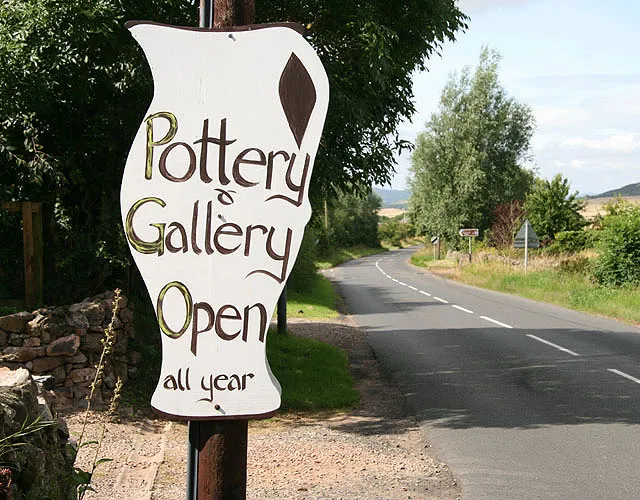
Photo: Victuallers, CC BY-SA 3.0, via Wikimedia Commons
On a wet Saturday in late November, a pottery studio in a converted chapel can feel like the quietest shop in Britain. There is a kettle somewhere. A dog may be asleep under a trestle table. The kiln is still ticking as it cools, and the shelves are crowded with mugs that have not yet been photographed for a website. This is the open day, a small ritual on the British craft calendar, and it is a far cry from the elbowing that passes for festive shopping in town.
Why November, and Why Not the High Street
Many British studios time their open weekends for late November, partly because people are starting to think about gifts and partly because the making year has reached a natural pause. Commissions are out. Christmas orders are drying. The maker has time to stand still and talk.
That timing makes the open day a gentler alternative to the Christmas scrum, but it is not a rejection of it. You can still buy a present. You can still come home with something wrapped. The difference is the pace. Instead of queueing for a car park and shouting over a soundtrack, you might spend twenty minutes hearing how a glaze was mixed, then buy one mug and leave. Small footfall, direct conversation, less packaging, no panic.
Finding the Door
Open days are rarely advertised on billboards. They tend to travel through makers' newsletters, Instagram stories, regional open studio trails and local arts weeks. The Craft Potters Association and similar bodies list events, but the best route is often simpler: find a potter whose work you like, join their mailing list, and wait. Studios in farm units, former schools and shared railway arches often open together, which makes a day of it possible without driving halfway across the country.
Check the practical bits before you set off. Is there parking, or is it a walk from the station? Are card payments taken, or should you bring cash? Is the studio step-free, and are there toilets? Some open days are ticketed to keep numbers manageable; others are drop-in. Neither is better, but knowing which one you are walking into saves a lot of hovering by the door.
What Actually Happens
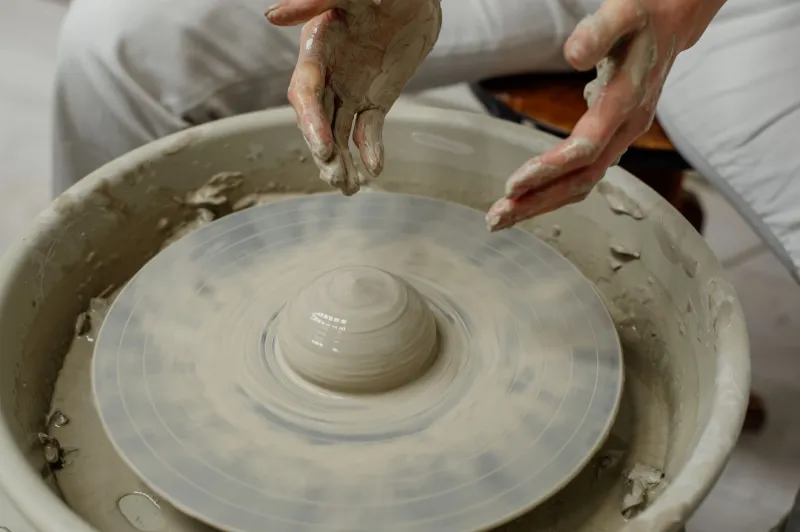
A good open day is not a theme park. It is a working studio with the curtains pulled back. You might see a throwing demonstration, a glaze test table, a kiln being opened, or a tour of the wedging bench and the damp cupboard. You might see nothing dramatic at all, just a maker moving pots from one shelf to another while answering questions.
That is the point. The appeal is not spectacle; it is proximity. You get to see the slight wobble in a rim that a photograph would hide. You get to pick up a bowl and feel how heavy it is. You get to ask whether the blue is actually blue in daylight. If you are lucky, there is a seconds table near the door and a folding chair for anyone who needs it.
The Etiquette Bit Nobody Prints
Ask before you pick up. Most makers are happy for you to handle work, but not all pieces are stable, and some are still on their way to a commission. Keep bags close and coats off the display surfaces. Do not tap pots to hear the sound, however tempting. If a wheel is turning, give it room. If a child is with you, watch the hands rather than the pots.
And do not treat the maker as a stallholder who can be haggled down. The price on the pot is usually the price. If you are uncertain, ask a question instead of making an offer. A studio open day works because the atmosphere is generous; it stops working if it becomes a car boot sale.
Questions Worth Asking Before You Pay
For anything headed for the kitchen, ask the practical things. Is it food safe? Can it go in the dishwasher? Is it microwave safe, oven safe, freezer safe? How does it feel about thermal shock, which is the polite way of asking whether hot soup in a cold bowl is a bad idea. For decorative pieces, ask what the glaze needs to stay looking its best.
It is also fair to ask about crazing, the fine network of lines that can appear in a glaze. Some glazes are formulated to craze and are still stable; others are a warning sign. A good maker will tell you the difference without flinching. If you are buying a gift, ask for care notes you can pass on. A small card with the pot is worth more than a vague promise that it will be fine.
Seconds, With Grace
Seconds are often the best-value pots in the room, but they need a clear eye. Ask why the piece is a second. Common reasons include a glaze that ran, a foot that warped slightly, a pinhole in the surface or a handle that sits a little lower than intended. None of these are disasters. Some are barely visible. Some are the reason the pot has character.
What you should not do is announce the flaw to the room as if you have found a secret. The maker already knows. If the piece works for you at the price, buy it and enjoy it. If it does not, put it down gently and move on.
Getting It Home
Bring a tote with a flat base, or ask whether the studio wraps. Many do, especially on open weekends, but not all have the space. Do not put a loose pot in a car boot next to a toolbox and hope for the best. If you buy something large, ask about collection or local delivery rather than wrestling it onto a bus.
A Slower Sort of Shopping
The first open day is mostly about learning how to be in a studio without treating it like a shop. You will probably buy less than you expected. You may ask a question you feel silly about. You will almost certainly leave with a mug, a care card and a renewed sense of why handmade things cost what they do.
That is a decent way to start December. Not with a scrum, but with a warm pot, a cooling kiln and a maker who had time to tell you how the glaze got its colour. The kiln shelf is a shop, but it is also a record of someone's week. Buy from it slowly.